Here is the direct answer: GEO and AIO refer to two of the most important concepts reshaping search marketing in 2026. GEO stands for Generative Engine Optimization, the practice of structuring your content so AI-powered platforms select and cite it when generating answers. AIO stands for AI Overviews, Google’s AI-generated summaries that now appear at the very top of search results for a significant and growing proportion of queries. Understanding both and knowing how to optimise for them is no longer optional for businesses that depend on organic search visibility.
If your marketing strategy still focuses exclusively on traditional rankings, this guide will show you exactly what has changed, why it matters, and what to do about it right now.
Why GEO and AIO Have Changed Search Marketing in 2026
Search worked the same way for roughly two decades. A user typed a query, Google returned a list of ten blue links, and the job of SEO was to get your page as close to the top of that list as possible.
That model is still relevant. But it is no longer the whole picture.
Google’s AI Overviews now appear in over 25% of searches according to Conductor’s analysis of 21.9 million queries in 2026. When an AI Overview is present, the click-through rate for the top-ranking organic result drops by 58% according to Ahrefs. And 60% of searches now end without any click at all.
At the same time, tools like ChatGPT, Perplexity AI, and Microsoft Copilot are becoming primary discovery channels for a growing segment of users. As of January 2026, 37% of consumers start searches with AI rather than traditional search engines. AI referral traffic to websites grew 206% in 2025.
The implication is direct. Ranking on page one of Google is no longer sufficient on its own. Brands now need to earn citations inside AI-generated answers. That is precisely what GEO and AIO optimisation address.
What Is GEO? Generative Engine Optimization Explained
GEO, or Generative Engine Optimization, is the discipline of optimising your content, website structure, and online presence so that AI-powered search engines select your content as a source when generating answers.
The term was formally introduced by researchers at Princeton University, Georgia Tech, and the Allen Institute for AI in late 2023. Since then it has moved from academic theory into live commercial practice, and it is now one of the fastest-growing areas in digital marketing.
Traditional SEO asks: how do I get my page to rank in Google’s results?
GEO asks: how do I get my content cited inside the answer AI systems generate when a user asks a question?
The platforms that GEO targets include:
- Google AI Overviews, which appear directly above organic results for an increasing share of queries
- ChatGPT with browsing enabled, which pulls from live web content when answering questions
- Perplexity AI, which synthesises answers from multiple sources and shows citations directly
- Microsoft Copilot, integrated across the Microsoft 365 ecosystem and Bing search
- Google Gemini, which generates answers within the Google interface
Each platform has its own retrieval and generation logic. But all of them share a core selection principle: they favour content that is clearly structured, directly answers specific questions, demonstrates genuine expertise, and carries credible external authority signals.
Read our complete guide on Generative Engine Optimization* for the full strategic breakdown of how GEO works and what it requires in practice.
What Is AIO? Google AI Overviews Explained
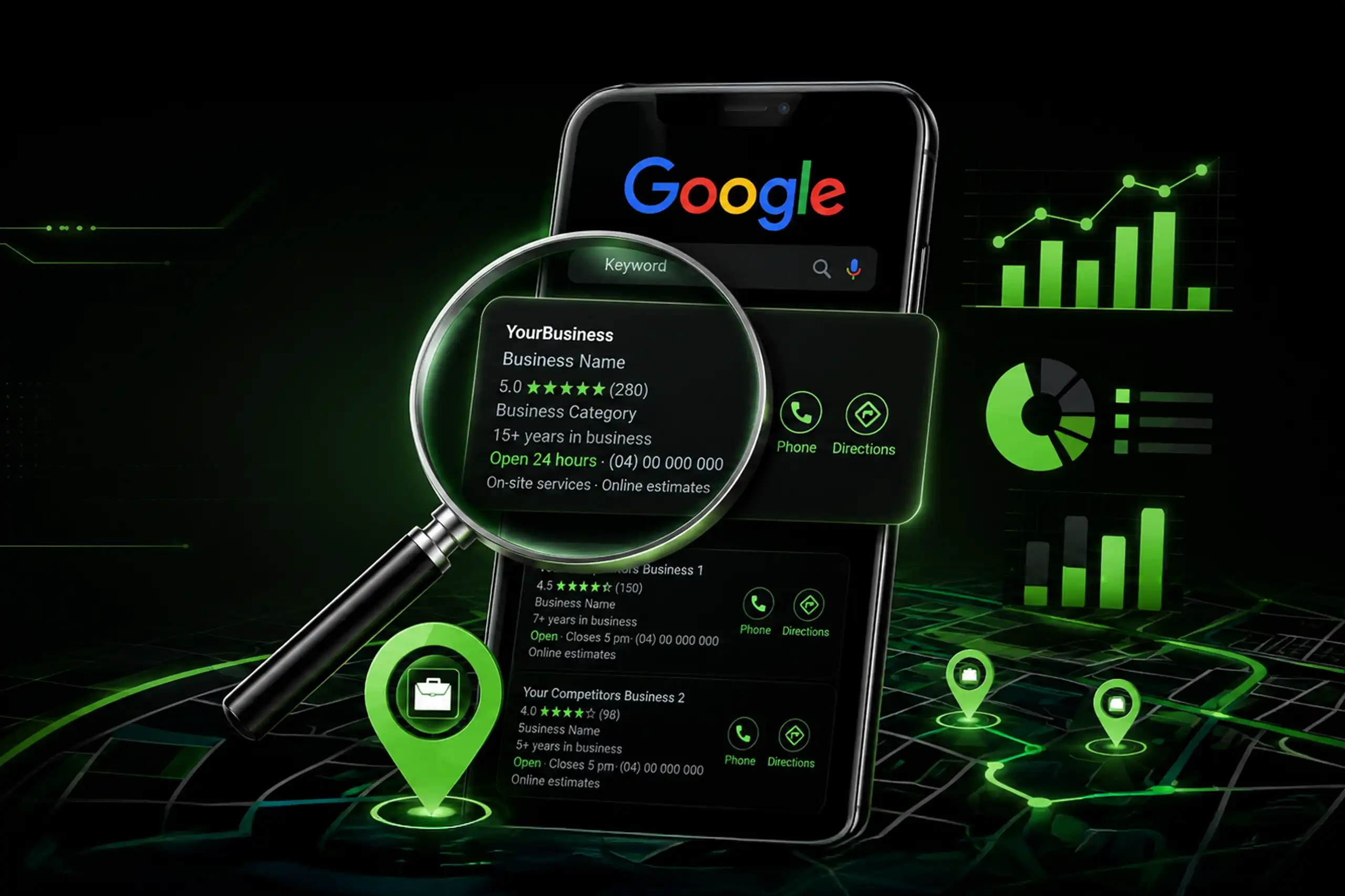
AIO, or AI Overviews, is Google’s AI-generated summary feature that appears at the very top of search results pages. It sits above all organic results, above paid ads in some configurations, and above featured snippets.
When a user searches a question on Google and an AI Overview is triggered, they see a synthesised answer generated by Google’s Gemini AI model, usually two to five sentences or a short list, followed by a small set of cited sources.
Google first launched AI Overviews in the United States in May 2024 under the name Search Generative Experience (SGE) during its testing phase. It has since expanded to the UK, India, the UAE, and multiple other markets.
Here is why AIO matters for your business:
It intercepts clicks before they reach organic results. When an AI Overview is present, users often get their answer without ever scrolling to the organic listings beneath it. The top-ranking organic result sees a 58% lower click-through rate when an AI Overview appears above it.
It creates a new citation opportunity. The sources cited inside an AI Overview receive visible brand exposure even when the user does not click through. Repeated citation builds brand recognition and authority in a way that traditional organic visibility cannot replicate.
It is not controlled by ranking position alone. Research shows that only 12% of ChatGPT citations matched URLs on Google’s first page. Content from pages ranking outside the top ten can be cited in AI Overviews if it is better structured, more specific, or more authoritative on the specific query.
Understanding how AI Overviews SEO* works in practice is the starting point for any brand wanting to earn consistent AIO citations.
How GEO and AIO Work Together
GEO and AIO are not the same thing, but they are deeply connected. Here is how to think about the relationship.
AIO is a specific feature. It is Google’s implementation of AI-generated search answers. You optimise for AIO by structuring your content in a way that Google’s Gemini model can extract and trust.
GEO is the broader discipline. It covers optimisation for all AI-powered answer engines across every platform, including Google AI Overviews but also ChatGPT, Perplexity, Copilot, and others.
Put simply: AIO optimisation is a subset of GEO. Everything you do to optimise for Google AI Overviews makes your content better positioned for citation across every AI platform. And a comprehensive GEO strategy that covers multiple platforms gives you diversified AI visibility that does not depend on any single platform’s algorithm.
The two also reinforce traditional SEO rather than replacing it. Strong technical site health, authoritative backlinks, and high-quality content remain necessary foundations. GEO and AIO optimisation build on top of that foundation rather than substituting for it.
What GEO and AIO Mean for Your Content Strategy
Lead With the Direct Answer on Every Page
AI systems are designed to deliver answers efficiently. Content that buries the key information after a long introduction gets passed over for content that answers the question in the first paragraph.
Every page you publish should open with a direct, specific answer to the primary question that page addresses. Keep that opening answer between 40 and 60 words. Follow it with supporting context, evidence, and depth. This structure earns AI citations and wins featured snippets in traditional search simultaneously.
Research confirms that opening paragraphs that answer the query upfront get cited 67% more often by AI systems.
Build Your Content Around Questions, Not Just Keywords
Traditional SEO targets keyword phrases. GEO targets questions. AI platforms are question-answering machines. The more directly and completely your content answers a specific, well-formed question, the more likely it is to be pulled into a generated response.
Map out every question your target audience asks about your products, services, and industry. Use Google’s People Also Ask boxes, AnswerThePublic, and keyword research tools to find the exact phrasing real users type and speak.
Then build content sections and FAQ pages that answer each question directly under a descriptive heading. This is also the approach that captures voice search optimization* opportunities, where the same question-first structure governs which content gets read aloud by voice assistants.
Our content production team builds every content brief around this question-first architecture, ensuring each piece is structured for both AI citation and traditional search performance.
Implement Schema Markup for AI Parsability
Schema markup does not guarantee an AI citation, but it removes ambiguity about what your content contains. When AI systems can clearly identify the type of content on a page and extract the information within it accurately, that content is more likely to be selected and cited.
Priority schema types for GEO and AIO optimisation:
- FAQPage schema on every page with question-and-answer sections, which increases AI citation rates by 28%
- Article schema with clear author attribution and publication dates
- HowTo schema for step-by-step guide content
- Organisation schema on your homepage and about page
- Speakable schema, which specifically marks content sections as suitable for AI audio delivery
Our web design and development team implements and validates schema across client websites as part of every technical SEO engagement.
Build E-E-A-T Signals That AI Systems Recognise
Both GEO and AIO optimisation are heavily influenced by Google’s E-E-A-T framework, Experience, Expertise, Authoritativeness, and Trustworthiness. AI systems are trained to favour sources that demonstrate genuine expertise and carry verifiable credibility signals.
A brand that has strong technical content structure but weak E-E-A-T signals will be retrieved by AI systems but passed over during the generation stage when the AI decides which sources to feature most prominently.
Read our comprehensive guide on E-E-A-T SEO* for the full framework of building these signals systematically across your website.
Specific E-E-A-T improvements that directly support GEO and AIO performance:
- Named author bios with verifiable credentials on every content piece
- First-hand examples and real client data referenced throughout your content
- Links to credible primary sources including research papers and government data
- Regular content updates that keep statistics and examples current
- Consistent brand presence across Google Business Profile, LinkedIn, and industry directories
Earn High-Quality External Citations
AI systems that use live search heavily weight content from domains with strong external authority signals. Research shows that only 12% of ChatGPT citations matched URLs on Google’s first page, meaning ranking position alone does not determine citation eligibility.
A single editorial mention in a recognised UAE or international industry publication does more for your GEO performance than dozens of links from irrelevant directories. This means link-building strategy for GEO is not about volume. It is about relevance and authority.
Our SEO services at Digital SWOT include dedicated digital PR and link-building work specifically designed to build the external authority profile that both traditional rankings and AI citation algorithms favour.
Track AI Citation Performance as a Core Metric
Traditional organic rankings tell you where your pages appear in search results. AI citation metrics tell you where your brand appears inside AI-generated answers. These are increasingly different things and require different measurement approaches.
Set up monitoring for referral traffic from chatgpt.com, perplexity.ai, and copilot.microsoft.com in Google Analytics 4. Track branded search volume trends, as increased AI citations typically drive corresponding increases in direct brand searches. Monitor your appearance manually across target queries on each major AI platform monthly.
Our data and CRM management team builds reporting frameworks that capture AI citation and referral signals alongside traditional SEO metrics, giving you a complete picture of your search visibility in 2026.
GEO and AIO in the UAE Market
The UAE presents specific opportunities in GEO and AIO that most regional businesses have not yet acted on.
Google AI Overviews have expanded into Arabic-language searches across the GCC. The supply of Arabic-language content structured specifically for AI citation remains far lower than demand. Brands producing properly structured Arabic content now hold a first-mover advantage that will be very difficult to close once more competitors enter the space.
English-language queries with UAE geographic specificity, such as “best digital marketing strategy for UAE businesses,” face significantly lower competition for AI citation than equivalent global queries. Regional specificity is a genuine advantage in AI citation that global competitors cannot easily replicate.
Our social media marketing and content teams produce bilingual AI-optimised content for UAE brands targeting both English and Arabic AI search audiences. Modern Standard Arabic is used throughout to ensure consistent reach across all GCC markets.
Frequently Asked Questions
What is the difference between GEO and SEO?
SEO focuses on ranking web pages in search engine results pages so users click through to your site. GEO focuses on getting your content cited inside AI-generated answers on platforms like Google AI Overviews, ChatGPT, and Perplexity, where the AI synthesises an answer rather than returning a list of links. GEO builds on SEO foundations but adds specific requirements around content structure, schema markup, and demonstrated expertise that traditional SEO does not prioritise to the same degree.
What does AIO stand for in digital marketing?
AIO stands for AI Overviews, the AI-generated summary feature that Google places at the top of search results pages above all organic listings. When an AI Overview is triggered for a query, Google’s Gemini AI model synthesises an answer from multiple web sources and displays it with a small set of cited links. AIO first launched in the US in May 2024 as Search Generative Experience and has since expanded globally including to UAE and GCC markets.
How do I get my content cited in Google AI Overviews?
To get cited in Google AI Overviews, structure your content to answer specific questions directly in the first paragraph, use descriptive headings that mirror your audience’s questions, implement FAQPage and Article schema markup, build genuine topical authority through a cluster of interlinked content on your core subjects, and earn backlinks from credible external sources. Content with specific sourced statistics earns significantly more citations than vague general statements.
Does ranking on Google page one guarantee appearing in AI Overviews?
No. Research shows only 12% of AI citations come from URLs on Google’s first page. AI systems select content based on structural clarity, directness of answer, topical authority, and credibility signals rather than ranking position alone. A page ranking in position eight with a well-structured, specific answer to a query can be cited in an AI Overview above pages ranking in positions one through five.
Is GEO only relevant for large businesses?
No. GEO rewards genuine expertise and clear content structure, not company size or marketing budget. A small specialist business with deep knowledge of a specific niche and well-structured content regularly earns AI citations against much larger competitors. The barriers to entry for GEO are lower than for traditional competitive SEO because authority in AI systems is determined more by content quality and structure than by domain age or link volume.
How long does it take to start appearing in AI Overviews?
There is no fixed timeline. Technical changes like schema implementation and content restructuring can show impact within 30 to 45 days of being indexed. Building the topical authority and external credibility signals needed for consistent citation across multiple AI platforms typically produces measurable results within three to six months of focused, consistent effort.
Build Your GEO and AIO Strategy With Digital SWOT
GEO and AIO are not trends to monitor from a distance. They are the conditions under which search marketing operates right now, and every month that passes without a strategy is a month your competitors are building AI citation authority that will compound over time.
At Digital SWOT, we build SEO and content strategies for businesses in Dubai and worldwide that are designed for how search actually works in 2026. From technical schema implementation and content restructuring to topical authority development and AI citation tracking through our data and CRM management team and AI solutions, we cover every layer of what it takes to get your brand cited and trusted by the AI systems your audience increasingly turns to first.
Talk to our team and let us assess your current GEO and AIO visibility and build a strategy around it.