Here is the direct answer: to improve E-E-A-T SEO on your website, you need to demonstrate real experience, prove subject-matter expertise, earn third-party recognition, and give visitors every reason to trust your brand. Each of those four signals needs to show up in your content, your site structure, and your online presence as a whole.
That is the short version. The rest of this guide breaks down exactly how to do it, page by page and signal by signal.
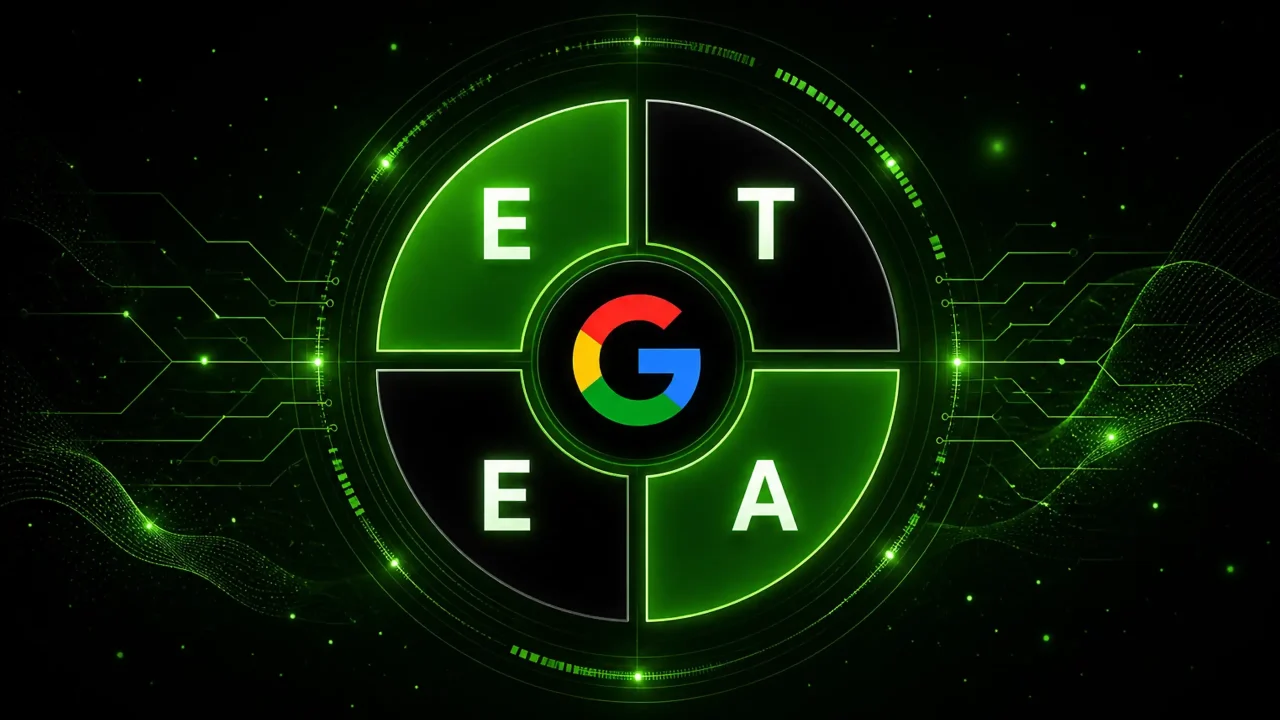
E-E-A-T stands for Experience, Expertise, Authoritativeness, and Trustworthiness. Google introduced the Experience component in December 2022, expanding the original E-A-T framework that had shaped quality evaluations since 2014. It is not a direct ranking factor in the traditional sense. It is the framework Google’s human quality raters use to evaluate content, and those evaluations feed into how Google trains and refines its algorithm over time.
If your site scores poorly against E-E-A-T criteria, rankings suffer. If it scores well, Google treats your content as a reliable source worth surfacing. The stakes are that straightforward.
What E-E-A-T SEO Actually Means (And Why Each Letter Matters)
Before fixing something, it helps to understand what each component is actually measuring.
Experience refers to first-hand, real-world involvement with the topic. A product review written by someone who bought and used the product carries more weight than one written from a product description alone. A travel guide written by someone who visited the destination is more credible than one assembled from other articles. Google wants to see evidence that the person behind the content has actually done the thing they are writing about.
Expertise is the depth of knowledge demonstrated in your content. It is not enough to write about a subject. Your content needs to show genuine command of it. For medical, legal, financial, and other YMYL (Your Money or Your Life) topics, Google applies especially strict expertise standards because inaccurate information in those areas can cause real harm.
Authoritativeness is about recognition from others in your field. It is not self-declared. It comes from backlinks from reputable sources, mentions in industry publications, citations in research, and the overall reputation your brand has built over time.
Trustworthiness is the foundation that holds the other three together. A site can demonstrate experience, expertise, and authority and still fail on trust if it lacks transparency, has security issues, or shows signs of deceptive practice. Accurate information, clear ownership, secure connections, and honest business practices all feed into this signal.
How to Improve E-E-A-T SEO: Step by Step
Show Real Experience in Your Content
The fastest way to demonstrate experience is to publish content that could only come from someone who has actually done the work.
Include specific details that a generalist could not fabricate. If you are writing about running Google Ads campaigns, reference actual campaign structures, real budget scenarios, and the kinds of mistakes you have seen in practice. If you are writing about web design for UAE businesses, mention the cultural and regulatory considerations that only someone working in that market would know.
Other ways to signal experience:
- Add case studies with real client outcomes, specific metrics, and before-and-after context
- Publish original data from your own research, client work, or industry surveys
- Include photos, screenshots, or video content that shows the work being done
- Write in a way that reflects lived practice, not textbook knowledge
For a digital marketing agency like Digital SWOT, this means going beyond explaining what SEO is and instead showing what SEO looks like in practice for a retail brand in Dubai trying to compete on both Arabic and English search terms.
Establish and Display Author Expertise
Every piece of content on your site should have a named, credible author. Not a generic “Admin” or “Staff Writer.” A real person with verifiable credentials and professional history.
Author pages should include:
- Full name and professional title
- Summary of relevant experience and qualifications
- Links to LinkedIn profile or other professional presence
- A list of other articles they have written on the site
- Any relevant credentials, certifications, or publications
This matters particularly for content in sensitive categories. A blog post about financial planning written by a certified financial planner carries more weight than the same post with no author attribution. Google’s quality raters are specifically trained to look for this.
If your content is produced by a team rather than a single author, a dedicated “About the Team” page that details collective expertise and experience achieves a similar effect.
Build Authoritative Backlinks and Brand Mentions
Authoritativeness cannot be manufactured from within your own website. It has to come from external recognition.
Backlinks from reputable, relevant websites remain one of the strongest authority signals Google uses. But the quality of those links matters far more than the quantity. A single mention in a recognised industry publication carries more weight than fifty links from low-quality directories.
Practical ways to build authority signals:
- Contribute guest articles to established publications in your industry
- Get your experts quoted in journalist requests through platforms like HARO or Qwoted
- Pursue speaking opportunities at industry events and conferences
- Publish original research that other sites will naturally reference and link to
- Build partnerships with complementary businesses that result in co-authored content or mentions
An SEO strategy that includes deliberate link-building and PR outreach builds the kind of authority profile that sustains rankings over time, rather than depending on content quality alone.
Strengthen Trust Signals Across Your Site
Trust is built through transparency and consistency. It also gets destroyed quickly by the absence of basic signals that users and Google expect to see.
Check your site for these foundational trust elements:
- HTTPS secure connection on every page, not just the homepage
- A clearly written and up-to-date Privacy Policy
- Accurate and detailed Terms of Service where applicable
- A real, functional Contact page with multiple contact methods
- A physical address and verifiable business registration details where relevant
- Clear disclosure of any sponsored content, affiliate relationships, or paid placements
For businesses in the UAE, displaying your trade licence number and Dubai Chamber of Commerce membership on your website adds a layer of verifiability that builds trust with both local users and international clients assessing your credibility.
Keep Your Content Accurate and Current
Outdated information is one of the most direct ways to damage E-E-A-T SEO. A page that references statistics from 2019, links to resources that no longer exist, or describes processes that have since changed signals that the site is not being actively maintained.
Set a content review schedule. Go through your most important pages at least once a year. Update statistics with current figures. Remove or update recommendations for tools or platforms that have changed. Refresh any sections where industry best practices have evolved.
This is particularly relevant for content production programmes that publish at high volume. More content means more maintenance. Building a review process into your content calendar from the start prevents accuracy debt from accumulating.
Build a Consistent Off-Site Presence
E-E-A-T SEO evaluation does not stop at your website. Google looks at your broader footprint across the web. Inconsistencies in how your brand is represented across different platforms create confusion and erode trust signals.
Ensure consistency across:
- Google Business Profile listing
- LinkedIn company page and personal profiles for key team members
- Industry directory listings
- Social media profiles
- Review platforms like Google Reviews, Trustpilot, and Clutch
For local businesses in Dubai, maintaining a consistent and complete presence across these platforms directly supports both local search visibility and overall brand credibility in Google’s eyes.
Use Schema Markup to Communicate Credibility to Google
Structured data helps Google understand who you are, what your content covers, and what credentials sit behind it. It does not directly improve E-E-A-T SEO, but it makes your existing signals easier for Google to identify and process.
Schema types most relevant to E-E-A-T:
- Person schema on author pages to link credentials and professional profiles
- Organisation schema to establish your brand identity, founding date, and contact details
- Article schema on blog posts to surface author, publication date, and modification date
- Review schema to display genuine customer ratings in search results
- FAQPage schema on pages with question-and-answer content
Implement these through your CMS, Google Tag Manager, or manually in your page source. Test each implementation using Google’s Rich Results Test before pushing live.
E-E-A-T SEO for Local Businesses in Dubai and the UAE
The E-E-A-T framework applies globally, but there are specific considerations for businesses operating in the UAE market.
Arabic-language content carries its own E-E-A-T requirements. If you publish content in Arabic, it should be written or reviewed by a native speaker with genuine knowledge of the subject. Machine-translated or poorly localised content signals low quality regardless of how well the English version performs.
Local authority signals matter here too. Coverage in publications like Gulf News, Khaleej Times, Arab News, and sector-specific regional trade media carries significant authority weight for UAE-focused searches. Getting your brand cited in these outlets builds the kind of regional credibility that generic backlink campaigns cannot replicate.
For businesses targeting customers across the GCC, combining strong local authority signals with solid E-E-A-T SEO foundations creates a compounding advantage that is difficult for competitors to close quickly. Our SEO services in Dubai are built around exactly this approach, helping brands build genuine authority in both English and Arabic search results.
Frequently Asked Questions
What is E-E-A-T SEO and why does it matter?
E-E-A-T SEO refers to the practice of optimising your website to meet Google’s standards for Experience, Expertise, Authoritativeness, and Trustworthiness. Sites that score well against these criteria rank more consistently and recover more quickly from algorithm updates.
Is E-E-A-T a direct Google ranking factor?
Not in the way that backlinks or page speed are. E-E-A-T is used by Google’s quality raters to assess content quality, and those assessments inform how Google trains and updates its algorithm. The practical effect on rankings is real, even if E-E-A-T is not a single measurable signal.
How long does it take to improve E-E-A-T SEO?
There is no fixed timeline. Technical changes like adding author bios, schema markup, and trust page elements can be implemented within days. Building genuine authority through backlinks and brand mentions is a longer-term effort that typically shows meaningful results over three to twelve months.
Does E-E-A-T apply to all types of websites?
Yes, but the standards vary. YMYL (Your Money or Your Life) websites covering health, finance, legal, and safety topics face the strictest E-E-A-T scrutiny. E-commerce, news, and professional services sites also face high standards. Entertainment and hobby sites face relatively lower bars, though quality still matters.
Can a small business compete on E-E-A-T against large brands?
Yes. E-E-A-T rewards genuine expertise and real experience, not company size. A small specialist agency with deep knowledge of a niche and a track record of real-world results can outperform a large generalist competitor on E-E-A-T signals in that specific area.
What is the difference between E-A-T and E-E-A-T?
The original framework was E-A-T (Expertise, Authoritativeness, Trustworthiness), introduced in Google’s Quality Rater Guidelines in 2014. In December 2022, Google added a second E for Experience, recognising that first-hand, lived experience with a topic is a distinct and valuable credibility signal separate from formal expertise.
Build E-E-A-T SEO Into Your Site With Digital SWOT
Improving E-E-A-T SEO is not a one-time fix. It is an ongoing commitment to producing content that reflects real knowledge, maintaining a credible brand presence, and building the kind of off-site recognition that tells Google your site belongs at the top of search results.
At Digital SWOT, we help businesses in Dubai and worldwide build SEO strategies that take E-E-A-T seriously from the ground up. From author credibility frameworks and schema implementation to link-building campaigns and content production programmes built around genuine expertise, we handle every layer. Talk to our team and let’s build an E-E-A-T SEO strategy that gives your website the authority it deserves.