Most business owners track SEO success by one number: website traffic. But here is the problem. A growing chunk of Google searches never sends anyone to a website at all.
Zero-click search is reshaping organic visibility faster than most agencies want to admit.Studies show that more than 60% of Google searches now end on the results page itself. Users get their answer, close the tab, and move on. No click. No session. No conversion tracked.
If you run a business in Dubai, London, Toronto, or anywhere else, this trend is already affecting your traffic numbers. The question is not whether zero-click search impacts you. It is what you plan to do about it.
What Is Zero-Click Search?
A zero-click search happens when Google answers a query directly on the search results page. The user never has to visit a website because Google puts the answer front and centre.
You have seen this play out countless times. You search “time in Dubai” and the clock appears instantly. You ask “what is a meta description” and Google pulls a boxed definition from a webpage. You got your answer without ever landing on that site.
These results come from several Google features:
- Featured snippets, which are boxed answers sitting above all organic results
- Knowledge panels, which show brand or entity information on the right side of the page
- People Also Ask boxes, which are expandable Q&A sections built from real search queries
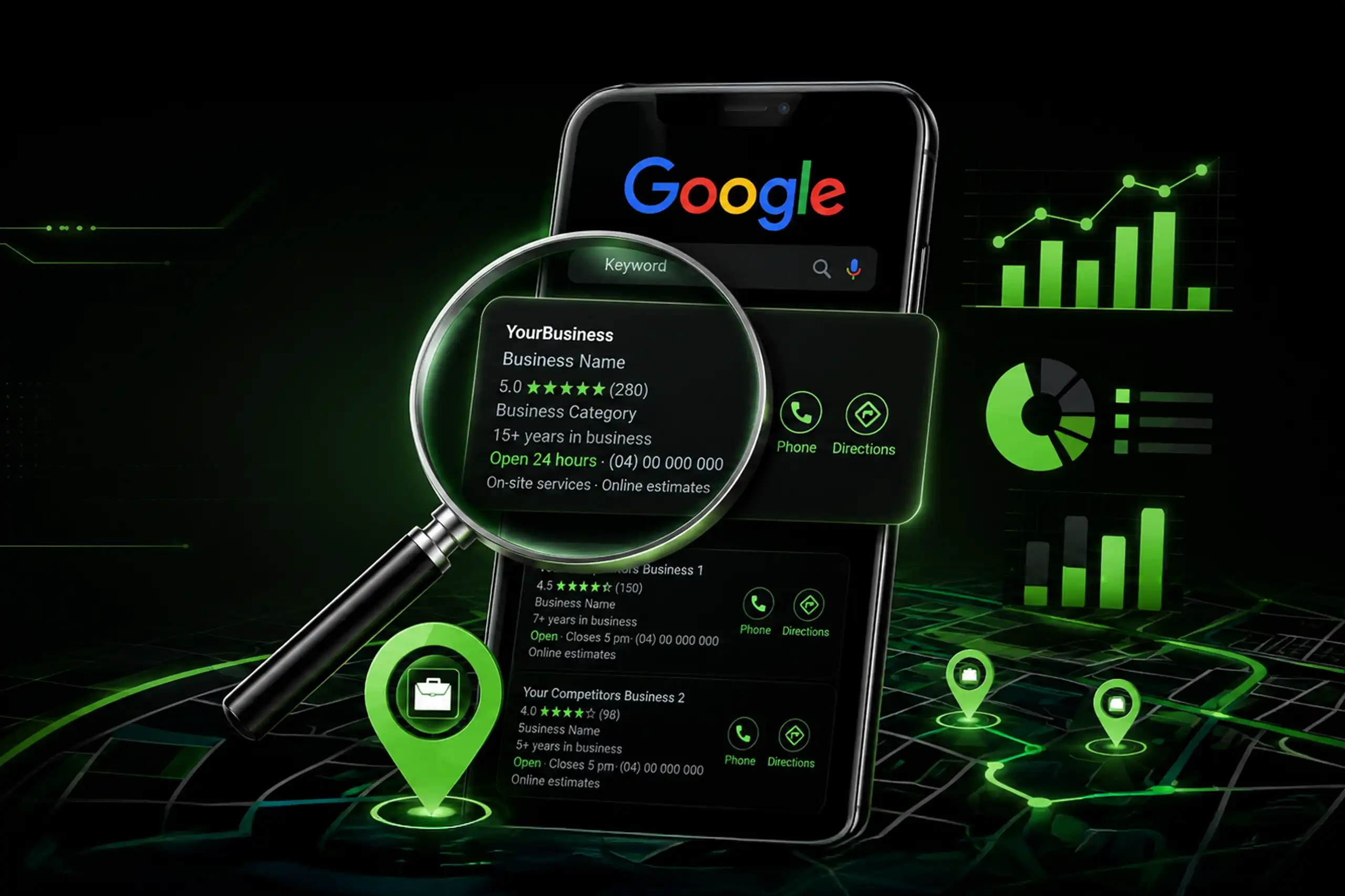
- Local packs, which display maps and business listings for location-based searches
- Utility tools like calculators, currency converters, and weather widgets
Each one intercepts a potential click. Each one is also an opportunity if you approach it with the right strategy.
Why This Trend Is Only Getting Bigger
Google has always wanted to answer questions faster. With AI Overviews rolling out more broadly across global search results, that mission is now operating at a different scale entirely.
Several forces are pushing zero-click growth forward at the same time.
Mobile users want answers without friction. They are not willing to wait for a page to load when the answer is sitting right there on the results page. Voice search plays into this too. When someone asks Siri or Google Assistant a question, the assistant reads one answer out loud. One. Whoever owns that snippet owns the voice result.
Then there is the shift in search intent. A larger share of searches today are informational rather than transactional. People researching, comparing, learning. Google handles those queries directly now.
Businesses that measure everything through click-through rates are working with an incomplete picture of their actual search presence.
Zero-Click Search Still Drives Real Business Value
Let us be direct about something. Zero-click does not mean zero value. The two are not the same thing.
When your brand appears in a featured snippet, a knowledge panel, or a People Also Ask box, something meaningful happens even without a visit.
Brand Impressions That Actually Stick
Appearing in Position Zero puts your name in front of thousands of users every single day. They see your brand, they see your expertise, and they register your credibility even if they never click through. Repeated exposure builds familiarity, and familiarity builds trust.
Think about it this way. A business owner in Riyadh might see Digital SWOT answering a question about PPC strategy three times across different searches in one week. By the time they are ready to hire an agency, they already know the name. That kind of brand recall does not show up in your session data, but it absolutely shows up in your revenue.
Voice Search Is Winner Takes All
Smart speakers and mobile assistants pull a single answer and read it aloud. There is no second place in voice search. If your content holds the featured snippet for a query, your brand is the authority every time that question gets asked out loud.
Warmer Traffic When People Do Click
Users who eventually visit your site after seeing your snippet multiple times arrive with a level of trust that cold traffic simply does not have. They have already been pre-qualified. Conversion rates from these visitors tend to run noticeably higher than average.
How to Actually Win at Zero-Click Search
Not every query has a featured snippet. You need to focus on query types that consistently trigger them.
Question-based keywords are your starting point. How to, what is, why does, when should. Comparison queries like “X vs Y” or “best X for Y” also pull snippets frequently. Definition queries for industry terms perform well too.
Once you find your targets, structure your content to match the format Google is already using. If the existing snippet is a paragraph, write a direct 40 to 60 word answer near the top of your page. If Google shows a numbered list, format your content as a numbered list. Mirror what is already working.
Tools like Semrush and Ahrefs let you filter keywords by SERP features. This tells you exactly which queries already have snippets and which ones are up for grabs. A well-planned SEO services strategy will map these opportunities before a single word gets written.
Build Your Answers Around People Also Ask
PAA boxes are one of the most overlooked opportunities in SEO right now. They expand dynamically. They cluster related questions together. And they pull content from a wide range of websites, not just the top-ranking pages.
Research the PAA questions tied to your core topics. Build dedicated FAQ sections that answer these questions with direct, clear, well-structured responses. Use the question itself as your H2 or H3 heading, then follow it immediately with a concise answer. Google needs to be able to identify the question and the answer without doing extra interpretive work.
This is exactly where a solid content marketing strategy pays dividends. Brands that plan content around real search questions consistently outperform those writing for topics alone.
Claim and Build Your Knowledge Panel
If your business does not have a Google Knowledge Panel yet, this is work worth prioritising. A Knowledge Panel signals to every searcher that your brand is established, verified, and trustworthy. It shows up even when no one is actively searching for you by name.
To build one:
- Verify and fully complete your Google Business Profile
- Create a Wikidata entry for your brand if you are not eligible for Wikipedia
- Build consistent NAP citations across business directories
- Implement Organisation schema markup on your website
- Earn mentions on authoritative industry publications
The more Google can verify your brand through consistent signals across the web, the faster a panel appears.
Win the Local Pack for Location Searches
For service businesses operating in specific markets, the local pack is critical. When someone searches “digital marketing agency Dubai,” the local pack appears before any organic result. Three businesses get shown. The rest get nothing.
Even when users do not click, appearing in that pack positions your brand as a market leader in your city. This is why local SEO for UAE businesses deserves its own dedicated strategy rather than being bundled into general SEO work.
Optimising your Google Business Profile properly makes a significant difference here:
- Select the most accurate primary and secondary business categories
- Upload high-quality photos and refresh them regularly
- Publish Google Posts at least once a week
- Respond to every review, positive or negative
- List your services with detailed descriptions and pricing where possible
Use Schema Markup to Help Google Understand Your Content
Structured data does not guarantee a snippet, but it removes ambiguity. When Google can read your content clearly, it is far more likely to surface it in rich results.
The schema types most relevant for zero-click wins include FAQPage for any FAQ content you publish, HowTo for step-by-step guides, Article for blog posts, Organisation for brand-level signals, and LocalBusiness for location visibility.
You can implement these through your CMS plugin, Google Tag Manager, or directly in the page head. Test every implementation through Google’s Rich Results Test before pushing to production.
Measure Impressions, Not Just Clicks
If you only track sessions and clicks, zero-click search is invisible to you, but it is still shaping how people perceive your brand.
Shift your reporting to include:
- Google Search Console impressions, which show how often you appear regardless of clicks
- Branded search volume trends in Google Trends or Search Console
- Featured snippet ownership tracked through Semrush Position Tracking
- Share of Voice metrics that compare your visibility against competitors across your target keyword set
What This Means for Your Content Strategy
The implication here is worth sitting with. You are no longer writing purely to get people onto your website. You are writing to own the conversation wherever it takes place.
That shifts content marketing priorities in a few important ways. Vague, hedged answers do not win snippets. Google favours content that commits to a clear, direct response. Your heading structure needs to be logical and easy for Google to parse quickly. And broad coverage of a single topic cluster consistently outperforms thin content scattered across many unrelated subjects.
E-E-A-T, which stands for Experience, Expertise, Authoritativeness, and Trustworthiness, is the framework Google uses to evaluate content quality. Every piece you publish should demonstrate genuine expertise, cite credible sources, and reflect real experience in your field.
A strong pillar page supported by eight to ten related blog posts tells Google you are a serious authority on that subject. That is the content it pulls from when generating AI Overviews and featured snippets.
The Dubai Market Angle
Businesses operating across the UAE and the wider GCC face a specific set of dynamics when it comes to search behaviour. Mobile usage rates here are among the highest globally. Voice search adoption follows the same pattern. And English-language competition for digital marketing keywords is fierce.
For a digital marketing agency in Dubai expanding internationally, zero-click search is a way to build credibility and visibility without necessarily out-spending larger competitors. When your content answers the right questions in the right format, your brand appears alongside or above companies with far bigger budgets.
Pairing that with strong local SEO foundations gives UAE businesses a serious edge in both regional and global search results.
This levels the playing field in a way that paid search simply cannot replicate at scale.
Frequently Asked Questions
What is zero-click search in SEO?
Zero-click search refers to searches where users get their answer directly on the Google results page without visiting any website. Google delivers answers through featured snippets, knowledge panels, People Also Ask boxes, and other search features.
Does zero-click search hurt my website traffic?
It can reduce clicks on informational queries. However, the brand visibility you gain through featured snippets and SERP features builds trust and authority over time. Users who do eventually click through often convert at higher rates because they already recognise your brand.
How do I get my content into a featured snippet?
Target question-based keywords, write direct 40 to 60 word answers near the top of your relevant pages, structure content with clear headings, use lists where applicable, and implement FAQPage schema markup on pages with FAQ sections.
Is zero-click search a threat or an opportunity?
Primarily an opportunity. Brands that build content strategies around owning featured snippets and other SERP features gain significant visibility without paying for every impression through ads.
How does Google’s AI Overviews affect zero-click search?
AI Overviews synthesise answers from multiple sources and display them above all organic results. Websites that get cited in AI Overviews receive brand exposure even without direct clicks. Strong E-E-A-T signals and genuine topical authority increase your chances of being selected as a source.
What tools should I use to track zero-click performance?
Google Search Console for impression data, Semrush for featured snippet tracking and Share of Voice, Ahrefs for SERP feature analysis, and BrightLocal for local SEO visibility monitoring.
Build Your Zero-Click Strategy With Digital SWOT
Clicks are not dead. But they are no longer the only metric worth caring about.
The brands pulling ahead in search right now are the ones investing in structured content, schema implementation, topical authority, and brand-building signals that compound over time. They show up whether or not someone clicks. And when someone is finally ready to buy, those brands are already the familiar face in the room.
At Digital SWOT, we build SEO strategies for businesses in Dubai and worldwide that account for how search works today. Featured snippets, knowledge panels, local pack dominance, AI-ready content structure. We cover it all.
Speak with our SEO team and let’s put together a zero-click strategy built around your specific market and goals.