
Here is the direct answer: voice search optimization means structuring your website content to match how people speak when searching, not just how they type. That means targeting conversational long-tail keywords, answering questions directly, loading your pages fast, and keeping your local business information accurate across every platform. Do those four things consistently and your content stands a real chance of being read aloud by voice assistants to millions of users every day.
Now let us go deeper into exactly how each of those steps works in practice.
Voice search is no longer a novelty feature. Over one billion voice searches happen every month globally. In the UAE alone, smartphone penetration sits above 97% and voice assistant usage continues to climb year on year. Users ask Siri, Google Assistant, and Alexa questions while driving, cooking, working, and shopping. The business that answers those questions wins the customer. The one that does not even shows up.
Why Voice Search Optimization Matters More in 2025
Most businesses still optimise entirely for typed search. That gap is your opportunity.
Typed searches tend to be short and fragmented. Someone typing might enter “digital marketing agency Dubai.” The same person using voice search asks “What is the best digital marketing agency in Dubai for small businesses?” The intent is identical. The phrasing is completely different. And if your content only targets the typed version, the voice result goes to someone else.
Three factors are accelerating this shift right now.
First, AI assistants are getting significantly better at understanding natural language. Google Assistant, Siri, and Alexa no longer require users to speak in stilted keyword phrases. People talk to their devices the same way they talk to other people.
Second, smart speaker adoption is rising rapidly across GCC households. Families in Dubai, Riyadh, and Abu Dhabi now have devices in their homes specifically designed to answer spoken questions.
Third, Google’s AI Overviews pull heavily from voice-search-friendly content formats. The same structural improvements that help you rank for voice queries also improve your chances of being cited in AI-generated search results.
Voice Search Optimization Tips That Actually Work
Optimise for Conversational, Question-Based Keywords
Typed search: “SEO agency Dubai” Voice search: “Which SEO agency in Dubai gets the best results for ecommerce businesses?”
The difference is length, specificity, and natural language phrasing. Voice queries average between seven and ten words, compared to two to four words for typed searches. They almost always begin with one of six words: who, what, where, when, why, or how.
Start by mapping out every question your customers realistically ask about your products and services. Tools like AnswerThePublic, Google’s People Also Ask boxes, and Semrush’s Keyword Magic Tool show you the exact conversational phrasing real users type and speak.
Then build dedicated content sections or full FAQ pages around those questions. Each answer should be direct, clear, and between 40 and 60 words. That length matches the average length of a voice search answer read aloud by Google Assistant.
Your content production strategy should treat every question your audience asks as a potential voice search opportunity, not just a blog topic.
Create a Strong FAQ Section on Every Key Page
FAQ sections are one of the highest-impact structural changes you can make for voice search visibility right now.
Voice assistants are optimised to pull spoken answers from clearly structured question-and-answer content. When your page contains a question as a heading and a concise answer immediately beneath it, Google can extract and read that answer precisely and confidently.
Best practices for FAQ sections:
- Write questions exactly as your audience would speak them, not how you would write a formal heading
- Keep answers between 40 and 80 words
- Place the most important question and answer combination near the top of the page
- Use FAQPage schema markup so Google formally recognises the structure
- Include one internal link within FAQ answers where it adds genuine value
A business that builds FAQ sections across its service pages, its blog posts, and its location pages creates dozens of individual opportunities to appear in voice results for different queries.
Win the Featured Snippet for Your Target Queries
The single most reliable path to voice search visibility is owning the featured snippet for your target question.
Voice assistants do not read out a list of results. They pick one answer and read it. That answer almost always comes from the featured snippet sitting in Position Zero on Google’s results page. If you own the snippet, you own the voice result.
To win featured snippets for voice-relevant queries:
- Identify queries that already trigger a snippet using Semrush or Ahrefs
- Study the format of the current snippet, whether it is a paragraph, a list, or a table
- Write a better version of that answer in the same format on your page
- Place it near the top of the page under a heading that mirrors the query
- Add FAQPage schema to strengthen the signal
Your SEO strategy should include dedicated snippet-targeting as a core workstream, not an occasional tactic.
Prioritise Local Voice Search Optimisation
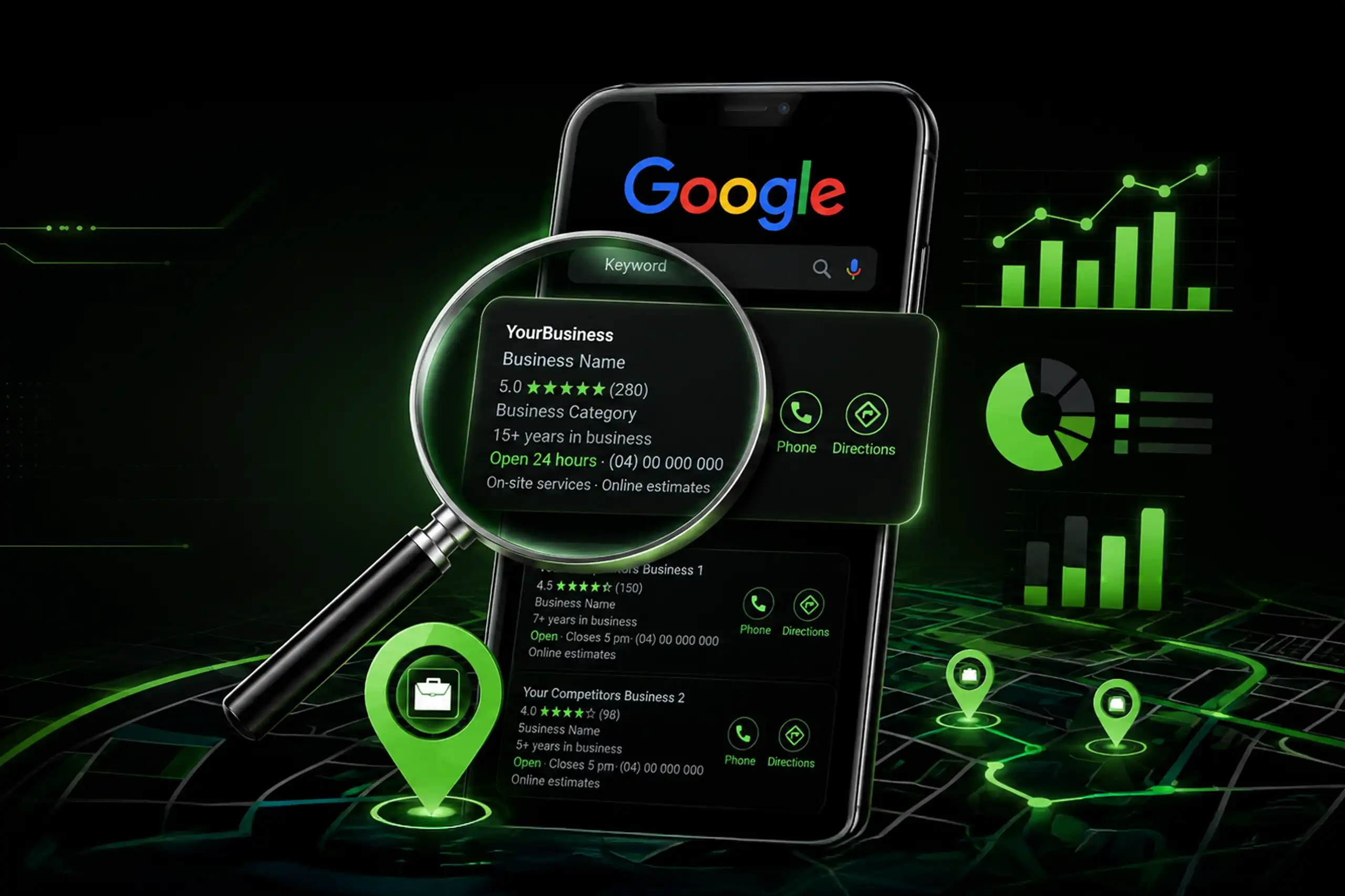
Local voice searches convert at an exceptionally high rate. When someone asks “Where is the nearest digital marketing agency?” or “Which web design company in Dubai is open now?” they are ready to act. They are not browsing. They want an answer and they want it immediately.
To capture local voice queries:
- Verify and complete your Google Business Profile with accurate name, address, phone number, and business hours
- Use natural local language in your content, including neighbourhood names, nearby landmarks, and city-specific references
- Build consistent NAP (Name, Address, Phone) citations across business directories including Yelp, Yellow Pages UAE, and industry-specific platforms
- Collect and respond to Google reviews regularly, as review signals contribute to local voice result selection
- Add LocalBusiness schema markup to your website with your complete business details
For a digital marketing agency serving businesses across Dubai and the wider GCC, local voice optimisation is one of the most direct paths to inbound enquiries from high-intent prospects who are ready to hire right now.
Improve Page Speed Across All Devices
Voice search happens on mobile devices and smart speakers. Both prioritise fast-loading content. A page that takes four seconds to load does not get read aloud by a voice assistant. Speed is a prerequisite, not a differentiator.
Run your key pages through Google’s PageSpeed Insights tool. Focus on these specific improvements first:
- Compress images without reducing visual quality using tools like WebP format
- Enable browser caching so returning visitors load pages faster
- Reduce server response time through quality hosting and CDN implementation
- Eliminate render-blocking JavaScript that delays page loading
- Implement lazy loading for images below the fold
Core Web Vitals scores directly influence mobile search rankings and voice search selection. A site that scores green across Largest Contentful Paint, First Input Delay, and Cumulative Layout Shift gives your content a measurable advantage over slower competitors.
Our web design and development team builds every site with Core Web Vitals performance built into the architecture from day one.
Use Natural Language Throughout Your Content
Most website content is written for how people read, not how they speak. Voice search optimisation requires bridging that gap.
Read your content out loud. Seriously. If it sounds awkward spoken at a normal conversational pace, it is not optimised for voice. Voice assistants read content to real people in real time. Content that sounds robotic, overly formal, or dense when spoken aloud gets replaced by content that sounds natural.
Specific writing adjustments that improve voice search alignment:
- Use contractions naturally. “You are” sounds more formal when spoken than “you’re”
- Write in second person where appropriate. Addressing the reader directly (“you”) matches conversational query patterns
- Break complex ideas into short, standalone sentences
- Avoid industry jargon that a general audience would not use when speaking
- Write introductory sentences for each section that summarise what follows in plain terms
This approach also improves readability scores, reduces bounce rates, and increases time on page, all of which send positive engagement signals to Google.
Target Long-Tail Keywords With Local and Specific Context
Short keywords are dominated by large authoritative websites with substantial domain authority. Long-tail, conversational keywords are where businesses of all sizes can compete effectively, especially for voice search.
For a business in Dubai, this means targeting phrases like:
- “How do I find a reliable PPC agency in Dubai for a hospitality business”
- “What is the best time to post on Instagram for UAE audiences”
- “How much does a professional website cost for a small business in Dubai”
Each of these reflects a real question a business owner in the region is asking. None of them have the same volume or competition as short keywords. But the user asking that question is far closer to making a purchasing decision than someone typing a two-word search term.
Our PPC and paid media and social media teams use this same long-tail targeting philosophy in paid campaigns. The principle applies equally to organic voice search.
Implement Schema Markup Across Your Site
Schema markup is structured data code added to your website pages. It tells search engines precisely what your content contains. For voice search, it is one of the most direct signals you can send.
Priority schema types for voice search optimisation:
- FAQPage schema on all FAQ sections
- LocalBusiness schema with complete address and contact details
- Speakable schema, which specifically marks content as appropriate for voice assistants to read aloud
- HowTo schema on step-by-step guides
- Review schema to surface customer ratings in voice results
The Speakable schema type in particular is designed specifically for voice search. It tells Google which sections of your page are most suitable for audio delivery. It is underutilised by most websites right now, which makes it a genuine competitive advantage for businesses that implement it properly.
Voice Search Optimisation for the UAE Market
The UAE presents specific opportunities for voice search that differ from Western markets.
Arabic voice search is growing rapidly and remains significantly underserved by quality content. Businesses that create properly structured Arabic-language content targeting spoken questions hold a first-mover advantage in regional voice results that will be difficult for later entrants to close.
English-language voice search in the UAE also has distinct characteristics. Users here blend formal English with regional references, local business names, and Gulf-specific terminology. Content that reflects genuine local knowledge consistently outperforms generic international content for these queries.
Ramadan, national holidays, and the UAE business calendar create seasonal voice search patterns that locally-informed businesses can anticipate and target. Planning content around these cycles gives your voice search strategy a regional edge that no international competitor can easily replicate.
Frequently Asked Questions
What is voice search optimization?
Voice search optimization is the process of structuring your website content, technical setup, and local business information so that voice assistants like Google Assistant, Siri, and Alexa select and read your content in response to spoken queries. It focuses on conversational language, question-based content, fast page loading, and accurate local information.
How is voice search different from regular SEO?
Regular SEO primarily targets typed keyword queries that tend to be short and fragmented. Voice search optimization targets longer, conversational, question-based queries that match how people speak naturally. Voice results typically pull from featured snippets, local packs, and FAQ-structured content rather than standard ranking positions.
Does voice search optimization help with Google AI Overviews?
Yes. The content structures that perform well for voice search, including direct answers, FAQ sections, schema markup, and E-E-A-T signals, are the same ones Google’s AI Overviews favour when selecting sources to cite. Optimising for voice search effectively optimises for AI-generated results simultaneously.
How important is local SEO for voice search?
Extremely important. A large proportion of voice searches are local in nature. Queries like “near me,” “open now,” and location-specific questions dominate voice search traffic. Businesses with complete, accurate local listings and strong Google Business Profile optimisation capture these high-intent queries at a disproportionate rate.
What schema markup should I use for voice search?
FAQPage, LocalBusiness, HowTo, and Speakable schema types are the most directly relevant for voice search optimisation. Speakable schema in particular signals to Google which sections of your content are ideal for audio delivery, though it is currently only available for news-type content in most implementations.
How quickly does voice search optimization show results?
Technical changes like schema implementation and page speed improvements can show impact within days of being indexed. Content restructuring and FAQ development typically produces measurable improvements in featured snippet ownership and voice result appearances within four to twelve weeks.
Build Your Voice Search Strategy With Digital SWOT
Voice search optimization is not a future consideration. It is a present opportunity that most of your competitors are not taking seriously enough. The businesses building voice-friendly content architectures today are the ones that will dominate spoken search results as the channel continues to grow.
At Digital SWOT, we build SEO strategies for businesses in Dubai and worldwide that account for every dimension of how search works in 2025, including voice, AI Overviews, local packs, and traditional organic rankings. From content production built around conversational queries to technical implementation of schema markup and Core Web Vitals, we handle every layer of voice search readiness.
Talk to our team and let’s put together a voice search strategy that makes your business the answer people hear.