
Search has changed more in the last two years than in the previous decade. Google is no longer just ranking ten blue links. It is generating answers. And if your brand is not showing up inside those AI-generated responses, you are already losing ground to competitors who are.
Generative Engine Optimization, or GEO, is the practice of structuring your content so that AI-powered search engines select it as a trusted source when generating answers for users. It sits alongside traditional SEO but plays by a different set of rules.
If you have heard terms like AI Overviews, Search Generative Experience, or ChatGPT search and wondered what they mean for your business, this guide is written for you.
What Is Generative Engine Optimization?
Traditional SEO is built around getting your page to rank on a results page. Generative Engine Optimization is built around getting your content cited inside an AI-generated answer.
When a user asks Google a question today, there is a growing chance the response comes from an AI Overview sitting at the very top of the page. That overview pulls information from multiple sources, synthesises it into a direct answer, and sometimes shows the sources it referenced. Those citations are the new Position One.
The same principle applies across other AI search tools. Perplexity AI, Microsoft Copilot, and ChatGPT with search enabled all generate answers by pulling from content across the web. GEO is the discipline of making sure your content is the one they pull from.
It is a relatively new field. The term was formally studied and published by researchers at Princeton, Georgia Tech, and The Allen Institute for AI in 2023. Since then, it has moved from academic theory into a genuine strategic priority for forward-thinking digital marketing teams.
Why GEO Matters Right Now
The timing of this shift is significant. Google’s AI Overviews now appear on a substantial portion of searches in markets across the US, UK, India, and the UAE. Early data from multiple SEO platforms shows that organic click-through rates drop noticeably when an AI Overview is present above the results.
That does not mean your content becomes worthless. It means the value of your content has moved. Instead of driving a click, well-optimised content drives a citation. Instead of winning a ranking position, you earn a mention inside the answer itself.
For businesses in Dubai and across the GCC, this shift is happening at the same time that mobile and voice search usage continues to grow rapidly. Users in this region are already accustomed to getting direct answers from their devices. GEO positions your brand to be the source of those answers.
Three things make GEO urgent right now:
- AI search tools are being adopted at a pace that outstrips most previous technology shifts
- Brands that earn early credibility in AI outputs build a compounding authority advantage
- The content signals that drive GEO success also strengthen traditional SEO performance, so the investment works on both fronts
How Generative Engine Optimization Differs from Traditional SEO
Understanding the difference between the two is the fastest way to understand what needs to change in your content strategy.
Traditional SEO is largely about signals. Backlinks, page speed, keyword placement, domain authority. You optimise a page so that Google’s algorithm ranks it above competing pages for a specific query.
GEO is about comprehension and credibility. AI engines do not just scan for keywords. They evaluate whether your content genuinely answers a question with accuracy, depth, and trustworthiness. They favour sources that demonstrate expertise, cite evidence, and present information clearly.
Here is a practical way to think about it. A traditional SEO article might be written to rank for the keyword “best CRM software.” A GEO-optimised article would be written to be cited when an AI engine generates a comprehensive answer about CRM software selection for small businesses.
The audience is different. In traditional SEO, you are writing for an algorithm that ranks pages. In GEO, you are writing for an AI that is trying to construct the most accurate, helpful answer possible. That is a meaningful shift in approach.
Core Principles of Generative Engine Optimization
Write for Questions, Not Just Keywords
AI engines are built to answer questions. The more directly your content answers a specific, well-formed question, the more likely it is to be pulled into a generated response.
This means moving away from keyword-stuffed content toward question-anchored content. Start sections with the question your audience is asking. Follow it immediately with a clear, direct answer. Then expand with supporting context, examples, and data.
The structure should mirror how a knowledgeable expert would answer a question out loud. Direct first, detailed second.
Build Genuine Topical Authority
AI systems are trained to identify authoritative sources. A website that covers a topic comprehensively, consistently, and accurately signals expertise in a way that a single well-ranked page cannot.
If you run a digital marketing agency in Dubai and want to be cited for digital marketing queries, you need a body of content that covers the subject from multiple angles. Strategy, tactics, tools, case studies, definitions, comparisons. The depth of your coverage tells AI engines that you are a reliable source on that topic.
This is the pillar and cluster model applied with GEO intent. A strong central resource supported by a network of related, specific content pieces that link back to it.
Make Your Content Easy for AI to Parse
AI engines process text at scale. Content that is clearly structured, logically organised, and free of ambiguity gets processed more accurately than content that meanders or buries key information.
Practical steps to improve parsability:
- Use descriptive H2 and H3 headings that reflect the question being answered
- Write concise introductory sentences for each section
- Keep paragraphs short and focused on a single point
- Use numbered lists for processes and bullet points for grouped information
- Define industry terms clearly rather than assuming reader knowledge
Your content marketing strategy should account for this structural clarity at the planning stage, not as an afterthought during editing.
Prioritise E-E-A-T Signals
Google’s quality framework of Experience, Expertise, Authoritativeness, and Trustworthiness applies directly to GEO. AI engines trained on or connected to Google’s index use these same signals to determine which sources are worth citing.
Specific ways to strengthen your E-E-A-T for GEO:
- Include author bios with verifiable credentials and professional experience
- Reference primary sources, original research, and reputable data
- Earn mentions and backlinks from established publications in your industry
- Keep content updated when facts, statistics, or best practices change
- Make your brand information consistent and verifiable across the web
Use Structured Data Markup
Schema markup helps AI systems understand not just what your content says, but what type of content it is and how the information within it is categorised.
FAQPage schema tells an AI that your content contains questions and answers. HowTo schema identifies step-by-step guidance. Article schema signals editorial content. Organisation schema helps establish brand identity.
None of these guarantee a citation. But they reduce the interpretive work an AI engine needs to do, which increases the likelihood that your content is understood and used accurately.
GEO and Local Search: A Dubai Perspective
For businesses targeting clients in the UAE, Saudi Arabia, and across the wider Gulf region, GEO intersects with local SEO in important ways.
When users ask AI tools about local services, “best digital marketing agency in Dubai” or “SEO company in Abu Dhabi,” the responses are pulled from locally relevant, authoritative sources. Businesses with strong Google Business Profiles, consistent local citations, and content that explicitly addresses the regional market have a clear advantage.
This is not theoretical. It is already playing out in markets where AI Overviews are active. Brands that invested in local authority before AI search became mainstream are now seeing that authority translated into AI citations.
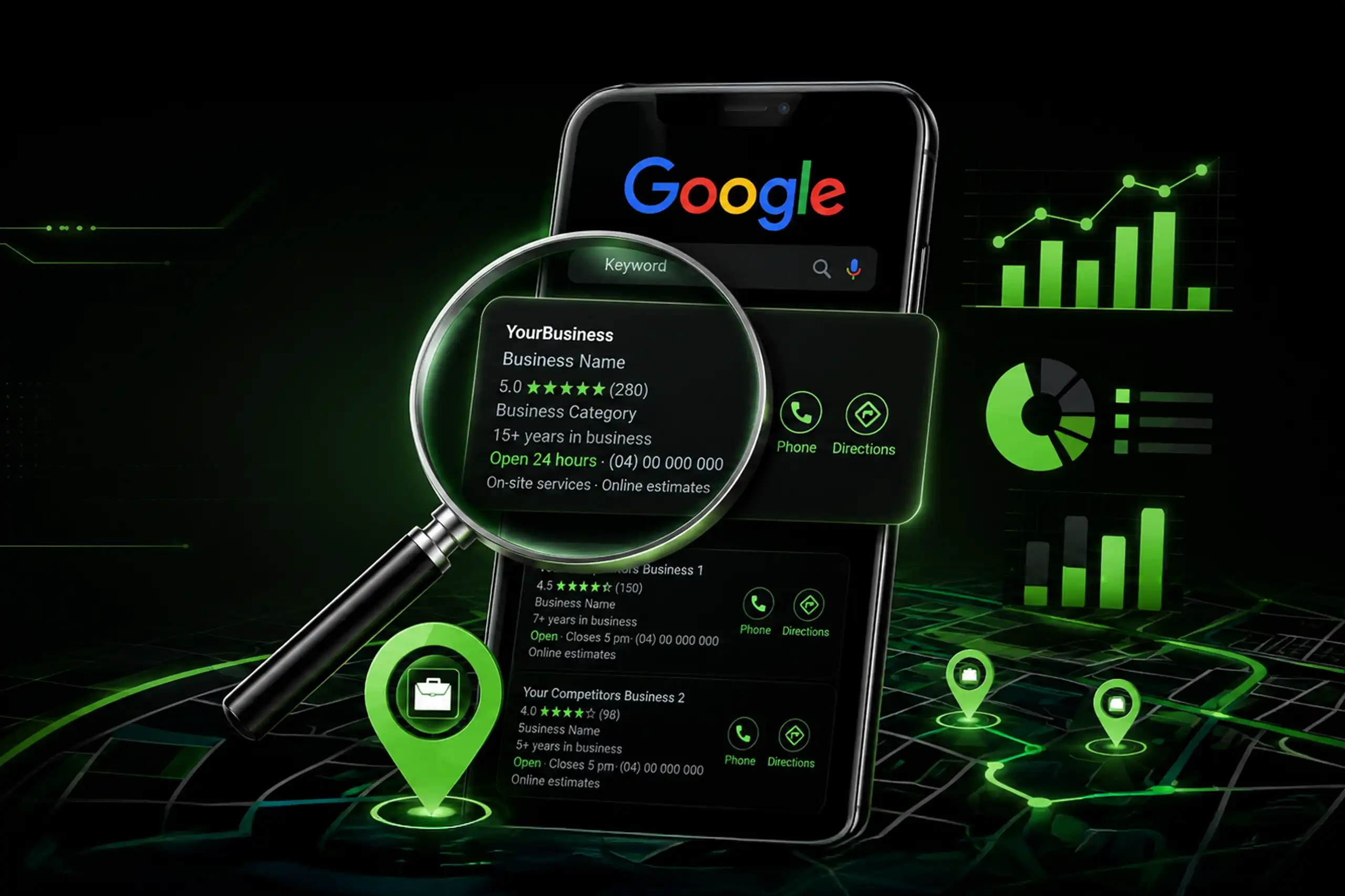
Optimising your Google Business Profile is one of the fastest ways to strengthen your local signals for both traditional and generative search results.
Common GEO Mistakes to Avoid
Most businesses approach GEO the same way they approached early SEO. They try to game the system with shortcuts. That approach fails faster with AI engines than it ever did with traditional algorithms.
Avoid these mistakes:
Writing for AI instead of humans. AI engines are trained on human-generated content. Content that reads as robotic, overly technical, or obviously manipulative gets filtered out or deprioritised. Write for a real reader first.
Ignoring brand consistency. If your website says one thing and your LinkedIn, Google Business Profile, and industry directory listings say something different, AI engines cannot build a reliable picture of who you are. Consistency across all touchpoints matters.
Publishing thin content at volume. A hundred shallow articles will not outperform ten genuinely comprehensive ones in AI search. Depth and accuracy carry significantly more weight than quantity.
Neglecting citations and sources. AI engines favour content that references data, studies, and credible external sources. Unsupported claims carry less weight than well-sourced ones.
Treating GEO as separate from SEO. The two disciplines share most of the same foundations. Strong traditional SEO services practices, quality content, authoritative backlinks, technical site health, create the base from which GEO success is built.
How to Start Your GEO Strategy Today
You do not need to overhaul your entire content library overnight. A focused starting point delivers results faster.
- Audit your existing content for question coverage. Identify which customer questions your site already answers well and which ones have no coverage at all.
- Identify your core topic clusters. Pick three to five subjects where your business has genuine expertise and build outward from there.
- Restructure key pages for clarity. Review your top-performing pages and improve their heading structure, answer directness, and internal linking.
- Implement schema markup on priority pages. Start with FAQPage and Article schema on your most visited content.
- Build your E-E-A-T foundations. Add author bios, update outdated articles, and pursue placements in reputable industry publications.
- Track AI citation performance. Tools like Semrush, Ahrefs, and dedicated AI visibility trackers are developing features specifically for monitoring GEO performance.
Frequently Asked Questions
What is Generative Engine Optimization in simple terms? Generative Engine Optimization is the process of creating and structuring content so that AI-powered search tools like Google AI Overviews, Perplexity, and ChatGPT search choose your content as a source when generating answers for users.
Is GEO replacing traditional SEO? No. GEO builds on top of traditional SEO rather than replacing it. Strong technical SEO, quality backlinks, and well-structured content remain the foundation. GEO adds an additional layer focused on how AI engines interpret and use your content.
How do I know if my content is being cited in AI answers? You can manually test this by searching your target queries in Google, Perplexity, and ChatGPT with browsing enabled and checking whether your brand or content appears. Some SEO platforms are also developing dedicated AI visibility tracking features.
Does GEO work for small businesses? Yes. In fact, small businesses with deep expertise in a specific niche often perform well in GEO because their content is focused and authoritative. Breadth of coverage matters less than genuine depth on the topics you know best.
How long does GEO take to show results? Similar to traditional SEO, GEO is a long-term investment. Most businesses start seeing measurable improvements in AI citation frequency within three to six months of implementing a structured strategy.
Does GEO apply to social media and YouTube? Increasingly, yes. AI tools are beginning to pull content from video transcripts, social posts, and platform-specific content. Maintaining consistent, expert-level content across channels strengthens your overall generative search presence.
Start Building Your GEO Strategy With Digital SWOT
Generative Engine Optimization is not a trend to watch. It is a shift already happening across every major search platform, and the businesses investing in it now are the ones that will dominate AI-generated results in the years ahead.
At Digital SWOT, we work with businesses in Dubai and worldwide to build content and SEO strategies that perform in both traditional and AI-powered search environments. From content architecture and schema implementation to E-E-A-T development and local SEO, we cover every layer of what it takes to get your brand cited, trusted, and chosen by AI search engines.
Talk to our team and let’s map out a GEO strategy built around your business, your market, and where search is heading next.